Why your free credit score may not be accurate when applying for a mortgage loan
You open your phone, check Credit Karma, see a crisp 740, and start browsing open houses. You feel confident.Then you sit down with a mortgage lender, we pull your tri-merge credit report, and the number comes back at 705.
Your immediate reaction: “Did your inquiry just drop my score 35 points?”
The short answer is: No, the inquiry didn’t kill your score. The truth is that the score you saw on your phone was never the score a mortgage lender was going to use in the first place.
After 30 years in the mortgage business, I see this misunderstanding derail homebuyer expectations every single week. Here is the straight, no-nonsense reality of how consumer credit apps work, why their scores differ from mortgage scoring, and how lenders actually evaluate your file.
So why isn't my score my score?
1) Credit Karma and similar 'free credit score" places use VantageScore - Lenders use FICO Score
There are two major credit-scoreing formulas in the United States: FICO and VantageScore
Credit Karma, your credit card company, and most free monitoring apps show you the VantageScore 3.0 score, which is calculated using data from TransUnion or Equifax. VantageScore was created by the three credit bureaus as a competitor to FICO. It is cheap for these sites to license and display it to you for free.
The Mortgage industry runs almost entirely on the classic FICO scores. When you apply for a conventional loan through Fannie Mae, Freddie Mac, or a goovernment=backed loan like FHA, VA, or USDA, lenders pull specific mandated FICO versions
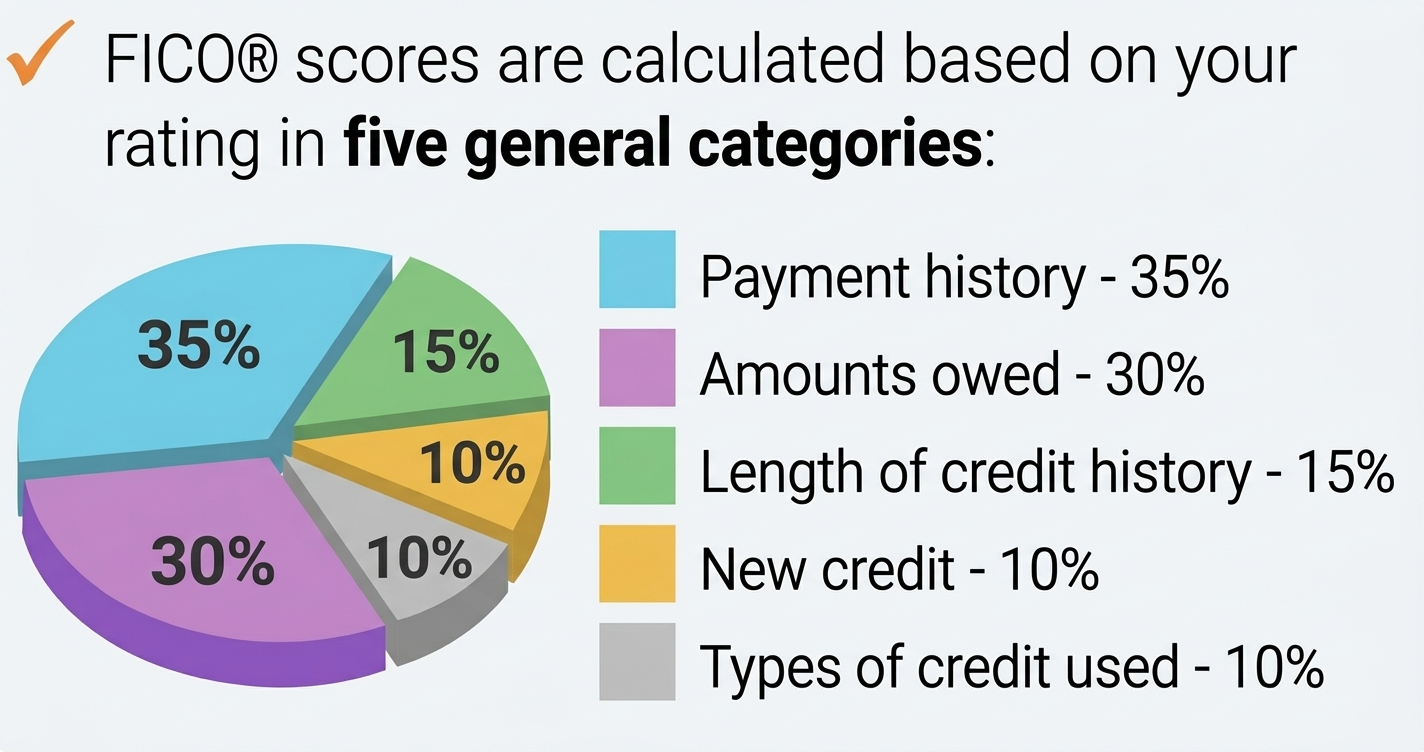
VantageScore and FICO weigh your payment history, credit utilization, and collections completely differently. A collection account you paid off two years ago might be ignored entirely by VantageScore, but an older mortgage FICO model will still penalize you for it. That discrepancy alone can swing your score by 20 to 50 points overnight.
2. There Is No Single “Credit Score”—Formulas
Depend on the Risk Borrowers often assume they have one universal credit score. In reality, you have dozens. Every industry evaluates risk differently, and credit scoring models are built to predict one specific question: What is the likelihood that this borrower defaults on this specific type of debt? Credit card issuers look at bankcard-enhanced FICO models that heavily weight revolving balance utilization and late payments on unsecured debt. Auto lenders use auto-enhanced models that heavily penalize auto repossessions or past late car payments, even if your credit cards are pristine. Mortgage lenders look at mortgage-specific FICO scores (specifically Equifax Beacon 5.0, Experian/Fair Isaac Version 2, and TransUnion FICO Risk Score 04).
A home is usually the largest financial obligation a person ever takes on. Because the stakes are so high, mortgage scoring models are intentionally conservative. They are far less forgiving of high credit card balances, late payments, or thin credit profiles than the consumer-facing model on your phone.
3. How Mortgage Lenders Actually Determine Your Score
When a mortgage broker pulls your credit, we pull what is called a Residential Mortgage Credit Report (RMCR)—commonly known as a tri-merge. We pull your mortgage FICO score from all three bureaus: Equifax Experian TransUnion We do not average these three numbers. We do not use the highest one. We use the middle score. Equifax: 720 Experian: 698 TransUnion: 710 In this scenario, your qualifying score is 710. If you are buying a home with a co-borrower (such as a spouse), we pull both sets of scores and use the lower of the two middle scores to underwrite the loan. If your middle score is 740, but your spouse’s middle score is 660, the pricing and qualification for your mortgage are based on 660. A consumer app like Credit Karma will never show you this dynamic because it does not cross-reference multiple bureaus under mortgage-industry rules.
4. "Did Pulling My Credit Drop My Score?"
Let’s put this myth to bed once and for all. When a mortgage lender pulls a hard inquiry, it will typically impact your score by zero to five points—and sometimes not at all. If your Credit Karma app read 735 and the mortgage report comes back at 695, that 40-point drop was not caused by the inquiry. It is simply the difference between a consumer-grade marketing score (VantageScore) and a rigorous, risk-adjusted mortgage FICO model. Furthermore, the credit bureaus know you need to shop around. Under mortgage scoring rules, multiple mortgage inquiries made within a typical 14-to-45-day window are bundled together and counted as one single inquiry against your score. You do not get penalized repeatedly for letting a professional review your numbers.
5. Changes Coming
You may have seen headlines announcing that the Federal Housing Finance Agency (FHFA) is modernizing credit score requirements for Fannie Mae and Freddie Mac conventional loans. Under this phased rollout, the mortgage industry is transitioning from legacy FICO models to newer scoring formulas: FICO 10 T and VantageScore 4.0. While this means the mortgage world is adopting a version of VantageScore, don't assume your current app scores are suddenly what lenders will use. The free apps you check today typically use VantageScore 3.0, whereas the new mortgage guidelines require VantageScore 4.0 and FICO 10 T—both of which analyze "trended data" (tracking your balance and payment habits over a rolling 24-month window, rather than just a one-day snapshot of your current balance). In addition, full implementation across secondary markets, wholesale lenders, and mortgage systems takes time. For the foreseeable future, traditional mortgage FICO scores remain the benchmark for determining your rates, pricing, and qualification.
Don't Rely on an App When You're Buying a House
Credit Karma is a great tool for tracking identity theft, monitoring when new accounts open, and watching general trends in your credit health. But it was never designed to tell you if you qualify for a $400,000 home loan. Before you start touring houses or making financial decisions based on a free app, get your actual mortgage scores pulled by someone who knows how to read them.
Talk through your scenario/h2>
Joe will tell you which program fits — and which one to skip.